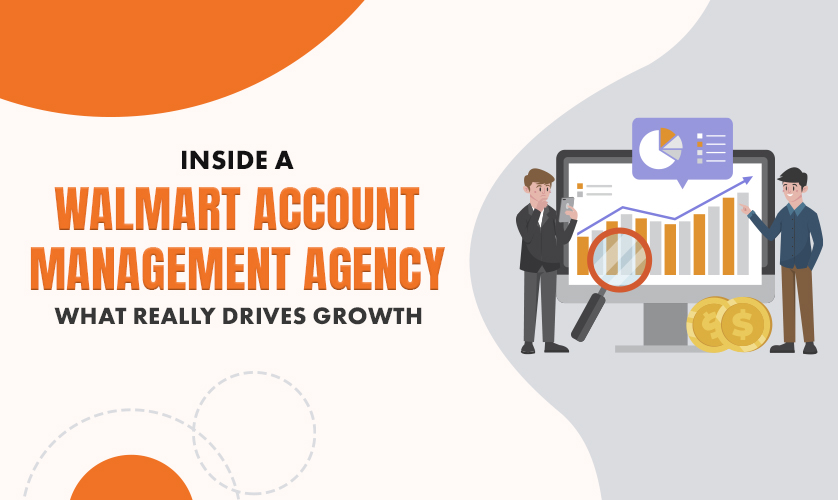
Selling on Walmart Marketplace looks simple from the outside—upload products, run ads, and wait for sales. But brands that scale consistently on Walmart don’t rely on surface-level tactics. They partner with a Walmart account management agency that understands what truly drives visibility, conversion, and Buy Box dominance.
Behind every high-performing Walmart store is a system of product feed corrections, attribute intelligence, and disciplined ad control. This blog breaks down what agencies actually do—and why brand-agency collaboration is the real growth engine.
Why Walmart Growth Is Different From Amazon
Walmart is not Amazon with a different logo. Its catalog structure, ranking signals, and Buy Box logic behave differently.
Common mistakes brands make:
Uploading Amazon-style listings without Walmart attribute optimization
Running ads without fixing catalog health
Ignoring feed errors that silently suppress visibility
A seasoned Walmart ecommerce partner focuses on building the foundation first—because Walmart rewards accuracy, compliance, and consistency more than aggressive spending.
1. Product Feed Correction: The Silent Growth Lever
Most Walmart listings underperform not because of pricing or ads—but because of broken or incomplete feeds.
What agencies actually fix:
GTIN mismatches and category conflicts
Missing required attributes (size, material, pack count, compliance tags)
Incorrect variant relationships
Image-to-attribute inconsistencies
Even a single feed error can:
Block ads from serving
Suppress organic rankings
Reduce Buy Box eligibility
A professional walmart account management agency audits the entire product feed—not just visible listing content—to ensure Walmart’s system can trust the product data.
2. Attribute Mapping: How Walmart SEO Really Works
Walmart SEO is attribute-driven, not keyword-stuffed.
Unlike Amazon, Walmart pulls ranking signals from:
Structured attributes (not just titles and descriptions)
Backend taxonomy alignment
Category-specific data points
Agency-led attribute optimization includes:
Mapping products to the most conversion-friendly subcategories
Aligning attributes with Walmart’s internal search filters
Ensuring consistency across variants and parent listings
This improves:
Search relevance
Filter discoverability
Organic impressions without increasing ad spend
This is where collaboration matters—brands provide accurate product specs, and agencies translate them into Walmart’s language.
3. Bid Control: Walmart Ads Are Not “Set and Forget”
Running Walmart ads without catalog health is like pouring water into a leaking bucket.
A strategic walmart ads service focuses on control, not just visibility.
What agencies manage daily:
Bid segmentation by keyword intent (brand, category, competitor)
Placement-level bid optimization
Budget pacing based on Buy Box ownership
Pausing ads when listings lose Buy Box to prevent wasted spend
Instead of chasing ACOS alone, agencies optimize for:
Incremental sales lift
Buy Box retention
Long-term keyword ranking
Ads are used to support strong listings—not compensate for weak ones.
4. Buy Box Optimization: The Growth Multiplier
Winning the Walmart Buy Box is not only about price.
Agencies monitor and optimize:
Fulfillment method (WFS vs Seller Fulfilled)
Inventory consistency and in-stock rate
Shipping speed and reliability
Content accuracy tied to compliance
Even the best ads won’t convert if Buy Box ownership is unstable. This is why a Walmart ecommerce partner aligns operations, content, and ads together—not in silos.
5. Why Brand–Agency Collaboration Matters More Than Tools
Tools don’t scale Walmart stores—clarity and collaboration do.
When brands and agencies work together:
Brands share accurate product data and supply updates
Agencies translate insights into feed, SEO, and ad actions
Decisions are made based on data, not assumptions
This partnership directly improves:
Listing trust score
Organic ranking velocity
Ad efficiency and Buy Box win rate
Growth on Walmart is not transactional—it’s systematic.
What to Expect From the Right Walmart Account Management Agency
A true growth-focused agency will:
Fix what’s broken before scaling ads
Treat product data as a revenue lever
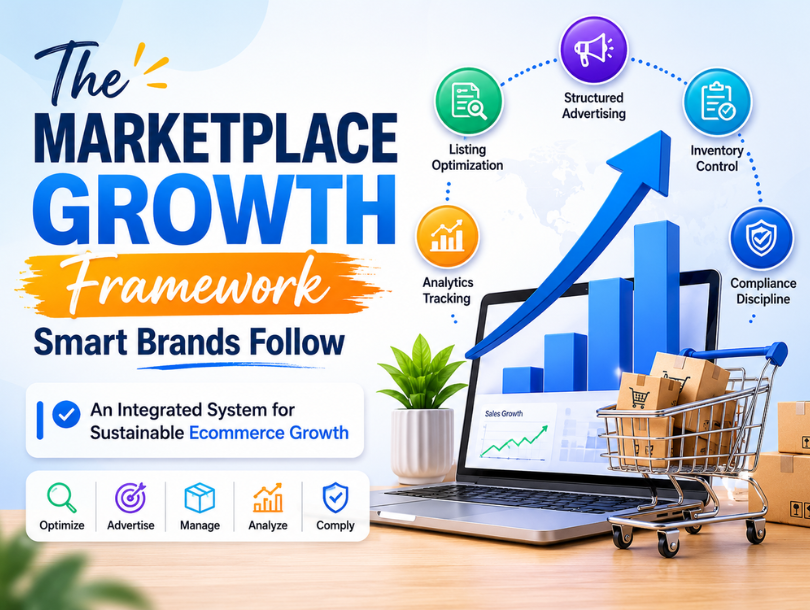
Align SEO, ads, and operations under one strategy
Act as a long-term Walmart ecommerce partner, not a task executor
If your Walmart store feels stuck despite ads and promotions, the issue is rarely demand—it’s usually structure.
Final Thought
Walmart growth doesn’t come from hacks. It comes from precision, compliance, and partnership.
When product feeds are clean, attributes are mapped correctly, and ads are controlled intelligently, Walmart rewards brands with visibility, trust, and scalable sales.
That’s what really drives growth—inside a Walmart account management agency.