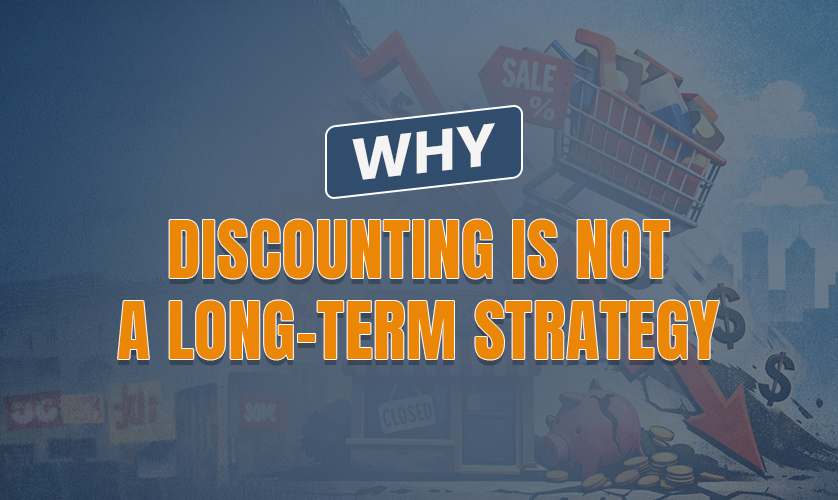
In the fast-paced world of e-commerce, discounting often feels like the easiest lever to pull. Sales dip? Lower the price. Competitors undercut you? Match or beat them. While this may deliver short-term spikes in revenue, it quietly sets a dangerous precedent—one that erodes brand value and weakens long-term profitability.
The Hidden Cost of Price Wars
At first glance, competing on price seems like a logical move. Lower prices attract more clicks, improve conversion rates, and can temporarily boost sales velocity. However, this strategy comes with a hidden cost: margin compression.
When brands consistently reduce prices:
- Profit margins shrink, limiting reinvestment into growth
- Customer expectations shift toward “discount-first” buying behavior
- Competitors respond with even lower pricing, triggering a race to the bottom
Over time, the market becomes saturated with similar products competing purely on cost, not value. This is where marketplace competition becomes destructive rather than strategic.
Perceived Value vs. Actual Price
One of the most overlooked aspects of discounting is its impact on perceived value. Pricing is not just a number—it signals quality, trust, and positioning.
When a product is frequently discounted:
- Customers begin to question its true worth
- The brand loses its premium or differentiated perception
- Repeat purchases depend on discounts rather than loyalty
In essence, you are training your audience to wait for a sale instead of building a reason to buy.
Why Strong Brands Don’t Compete on Price
Long-term brands don’t win by being the cheapest—they win by being the most valuable in the customer’s mind.
Instead of discounting, successful brands focus on:
1. Positioning
Clear brand identity and messaging help customers understand why your product is different. Whether it’s quality, innovation, or experience—positioning creates a reason to choose you beyond price.
2. Content Authority
High-quality content—images, videos, A+ content, and brand storytelling—builds trust. It educates the customer and reduces hesitation, improving conversion without lowering price.
3. Structured Advertising
Smart advertising strategies focus on:
- Targeting high-intent keywords
- Optimizing campaigns based on data
- Scaling what works instead of blindly increasing spend
This approach improves ROI rather than sacrificing margins.
A Smarter Ecommerce Pricing Strategy
A sustainable ecommerce pricing strategy is built on balance—not extremes. Instead of relying on constant discounts, consider:
- Strategic promotions (limited-time, purpose-driven offers)
- Bundling products to increase perceived value
- Enhancing listings to improve conversion rates
- Leveraging brand equity to justify pricing
The goal is not just to sell more—but to sell profitably and consistently.
Final Thought
Discounting is easy. Building a brand is hard. But only one of these creates long-term growth.
If your business depends on price cuts to survive, it’s time to rethink the foundation. Because in the long run, value wins—not discounts.