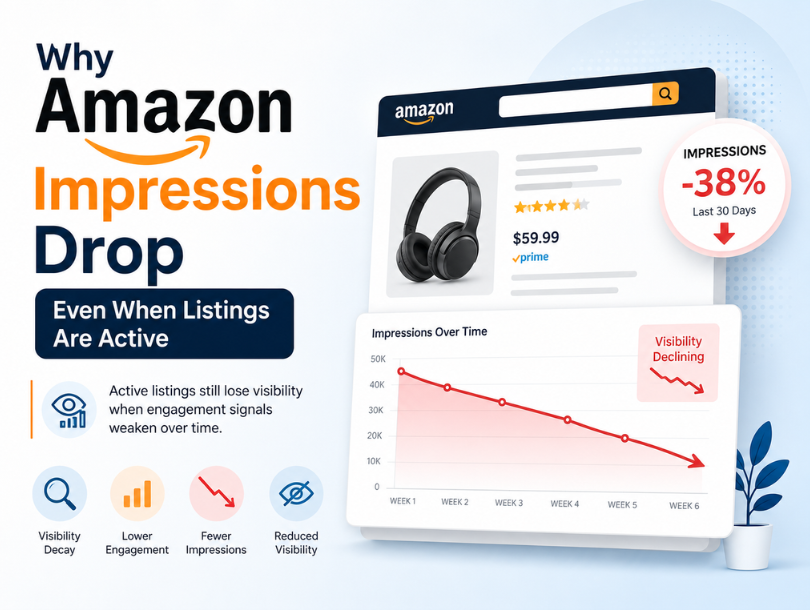

The Silent Killer of Marketplace Growth
Most sellers focus heavily on creatives, ads, and pricing strategies—but overlook one critical factor: backend data accuracy. While front-end elements attract attention, backend errors quietly sabotage visibility. If your listings aren’t structured correctly, even the best products struggle to rank, convert, or scale. This is where listing data optimization becomes a decisive growth factor.
What Are Backend Errors in Marketplace Listings?
Backend errors refer to hidden data-level issues that impact how marketplaces like Amazon interpret and rank your product. These include:
- Incorrect or missing attributes (size, material, category)
- Mismatched parent-child variations
- Inconsistent product descriptions across fields
- Backend keyword misalignment
- Category classification errors
These issues don’t always trigger warnings—but they directly affect discoverability and performance.
Why Backend Errors Destroy Visibility
1. Algorithm Confusion Reduces Ranking
Marketplace algorithms rely on structured data to understand your product. When attributes are incorrect or incomplete, the system struggles to index your listing properly—leading to lower keyword rankings and poor search placement.
2. Broken Variations Kill Conversion Signals
Improper variation mapping (like wrong sizes or colors grouped together) disrupts customer experience. This leads to confusion, lower engagement, and ultimately weak conversion signals—which further pushes your listing down.
3. Keyword Relevance Gets Diluted
Backend keywords and attributes must align with front-end content. If there’s inconsistency, your listing loses relevance for high-intent search queries, reducing organic traffic.
4. Suppression & Compliance Risks
Many marketplaces enforce strict marketplace compliance rules. Incorrect data can lead to listing suppression, restricted visibility, or even account-level issues if repeated frequently.
5. Ads Become Inefficient
Even with strong PPC campaigns, backend errors limit performance. Poor indexing means your ads struggle to appear for relevant searches, increasing wasted spend and reducing ROI.
The Role of Listing Data Optimization
Listing data optimization ensures that every backend field supports visibility, relevance, and compliance. It’s not just about filling data—it’s about structuring it strategically for algorithm alignment.
Key elements include:
- Accurate and complete attribute mapping
- Proper variation hierarchy setup
- Consistent product information across all fields
- Strategic backend keyword integration
- Category and taxonomy accuracy
When executed correctly, this improves indexing, boosts organic reach, and enhances conversion rates.
Common Signs Your Backend Data Is Broken
- Your product is not ranking for obvious keywords
- Traffic is low despite good creatives and ads
- Variations show incorrect details
- Listings get suppressed without clear reason
- High impressions but low conversions
If you notice these patterns, backend errors are likely holding you back.
How to Fix Backend Errors (Actionable Steps)
1. Audit Your Listing Data
Review all backend fields including attributes, keywords, and category mapping. Identify gaps, inconsistencies, and mismatches.
2. Align Frontend & Backend Content
Ensure titles, bullet points, descriptions, and backend keywords are consistent and keyword-aligned.
3. Correct Variation Structures
Rebuild variation families where necessary. Ensure each child SKU is correctly mapped with accurate attributes.
4. Optimize Backend Keywords
Use relevant, high-intent keywords without duplication. Focus on search behavior, not just volume.
5. Ensure Marketplace Compliance
Follow platform-specific guidelines strictly. Each marketplace has different rules—ignoring them leads to suppressed visibility.
Conclusion: Precision Drives Performance
In e-commerce, visibility isn’t just earned through ads or aesthetics—it’s built on structured data accuracy. Backend errors don’t make noise, but they steadily erode your growth potential.
If you want consistent rankings, scalable traffic, and profitable performance, backend precision isn’t optional—it’s foundational. Strong listing data optimization ensures your product is not just visible, but positioned to win.