Scaling an online business sounds exciting in the beginning. More orders, more visibility, more marketplaces, and increasing revenue often feel like clear signs of success. But for many sellers, the real struggle begins when they move from being a small seller to becoming a growing brand. This stage is where many businesses lose control, face operational chaos, and eventually stop growing.
The truth is that scaling is not only about increasing sales. It is about building systems, refining operations, and evolving from a seller mindset into a brand mindset. Without proper structure, even profitable sellers can hit a growth ceiling. This is why having a strong ecommerce scaling strategy becomes critical for long-term success.
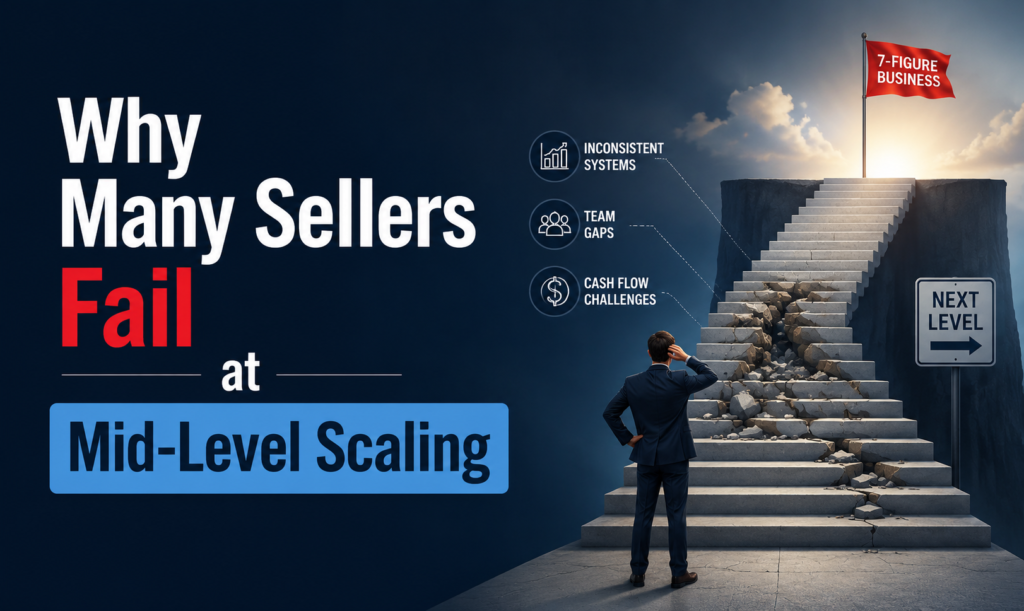
The Mid-Level Scaling Trap
Most sellers start lean. In the early stages, owners manage almost everything themselves — product sourcing, listings, customer support, inventory, advertising, and marketplace communication. This approach works when order volume is low.
However, once sales begin increasing, manual management becomes a problem.
Mid-level sellers often face challenges such as:
- Delayed order processing
- Inventory mismanagement
- Poor ad optimization
- Team communication gaps
- Listing inconsistency across marketplaces
- Increased customer complaints
- Higher return rates
- Marketplace policy violations
At this point, growth starts creating pressure instead of profits.
Growth Requires Operational Evolution
Many sellers believe scaling means adding more products or increasing advertising budgets. In reality, growth requires operational maturity.
A business that wants to scale successfully must evolve in three major areas:
1. Structured Team Building
One of the biggest reasons sellers fail at scaling is the lack of specialized roles. Founders continue handling everything themselves instead of building a capable team.
As businesses grow, responsibilities should be divided into clear departments such as:
- Marketplace management
- Advertising and PPC
- Inventory planning
- Customer support
- Content and listing optimization
- Logistics coordination
Without role clarity, businesses become dependent on one person, which slows growth and creates operational bottlenecks.
Lack of Systems Creates Chaos
Small sellers often operate without documented workflows. Tasks are handled manually, decisions are reactive, and processes change daily. This becomes dangerous during scaling.
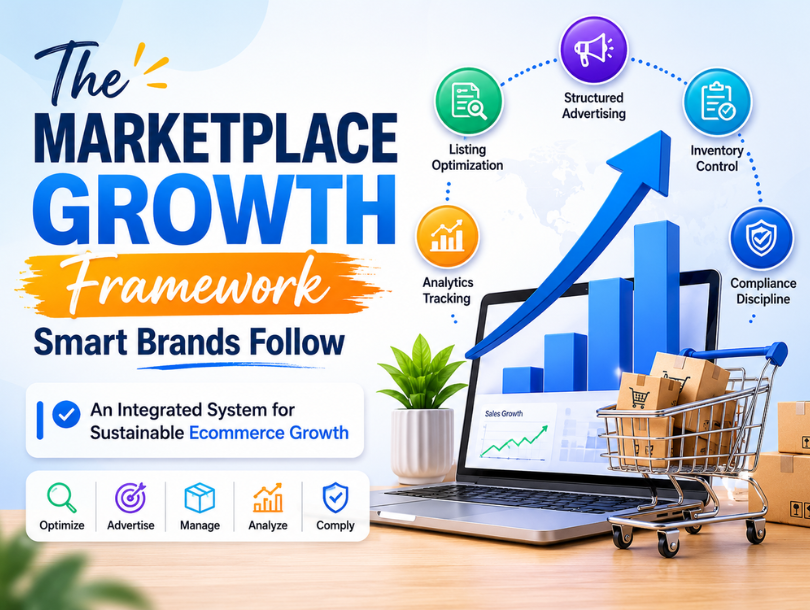
Successful brands build reliable seller growth systems that help them maintain consistency even when order volume increases.
Important systems include:
Inventory Management Systems
Overselling, stockouts, and delayed replenishment damage marketplace rankings and customer trust. A proper inventory system helps sellers forecast demand, manage stock levels, and maintain smooth operations.
Advertising Optimization Systems
Scaling ads without structure often leads to wasted budgets. Brands need organized PPC campaigns, keyword segmentation, performance tracking, and profitability analysis to scale efficiently.
Customer Support Processes
As order volume grows, customer queries increase rapidly. Without proper response systems, ratings begin to fall. Fast response workflows and support SOPs help maintain customer satisfaction.
Performance Tracking
Growing brands rely on data. Monitoring metrics such as TACoS, conversion rate, repeat purchase rate, return percentage, and profit margins helps businesses make smarter decisions.
Transitioning From Seller to Brand
The biggest mindset shift during scaling is understanding the difference between being a seller and becoming a brand.
Small sellers usually focus only on short-term sales. Brands focus on long-term positioning, customer trust, repeat business, and operational stability.
A brand-focused business invests in:
- Better product presentation
- Professional content
- Customer experience
- Consistent packaging
- Brand storytelling
- Repeat customer strategies
- Multi-channel expansion
This transition is what separates temporary sellers from long-term marketplace leaders.
Why Scaling Often Reduces Profitability
Another major reason sellers struggle during mid-level growth is poor financial discipline. Many businesses see rising sales but shrinking profits.
This happens because:
- Ad spending increases without efficiency
- Warehousing costs rise
- Returns become difficult to manage
- Team expenses increase
- Operational errors create losses
Without structured planning, revenue growth can actually reduce profitability.
This is why every ecommerce scaling strategy should focus not only on sales growth but also on operational efficiency and profit stability.
The Importance of Process Refinement
Brands that scale successfully continuously refine their processes.
They regularly improve:
- Product listings
- Advertising campaigns
- Shipping workflows
- Supplier coordination
- Team communication
- Marketplace compliance
Scaling is not a one-time achievement. It is an ongoing process of optimization and operational improvement.
Technology Plays a Critical Role
Modern ecommerce growth requires technology integration. Businesses relying only on spreadsheets and manual tracking often struggle to keep up.
Scaling brands use tools for:
- Inventory synchronization
- Marketplace analytics
- Automated customer communication
- PPC management
- Profit tracking
- Team collaboration
Technology reduces human error and improves business efficiency.
Multi-Marketplace Expansion Challenges
Many mid-level sellers expand to platforms like Amazon, Walmart, eBay, Etsy, and Shopify without proper systems. While expansion increases visibility, it also increases operational complexity.
Without centralized processes, sellers face:
- Inventory mismatch
- Pricing inconsistency
- Delayed shipping
- Marketplace policy risks
- Listing duplication issues
Structured operational management becomes essential during expansion.
Building Long-Term Scalability
The brands that survive long-term are not always the fastest-growing businesses. They are the businesses with strong operational foundations.
Long-term scalability requires:
- Clear workflows
- Defined team responsibilities
- Strong inventory systems
- Consistent customer experience
- Data-driven decision making
- Financial planning
- Scalable advertising strategies
Growth without systems eventually creates instability.
Final Thoughts
Many sellers fail at mid-level scaling because they continue operating like small businesses while trying to achieve brand-level growth. Scaling demands more than increased sales. It requires operational evolution, structured teams, refined workflows, and reliable seller growth systems.
The transition from seller to brand is not simply about becoming bigger. It is about becoming smarter, more organized, and operationally stronger.
Businesses that invest in systems, process refinement, and long-term strategy are the ones that successfully scale and sustain growth in today’s competitive ecommerce market.