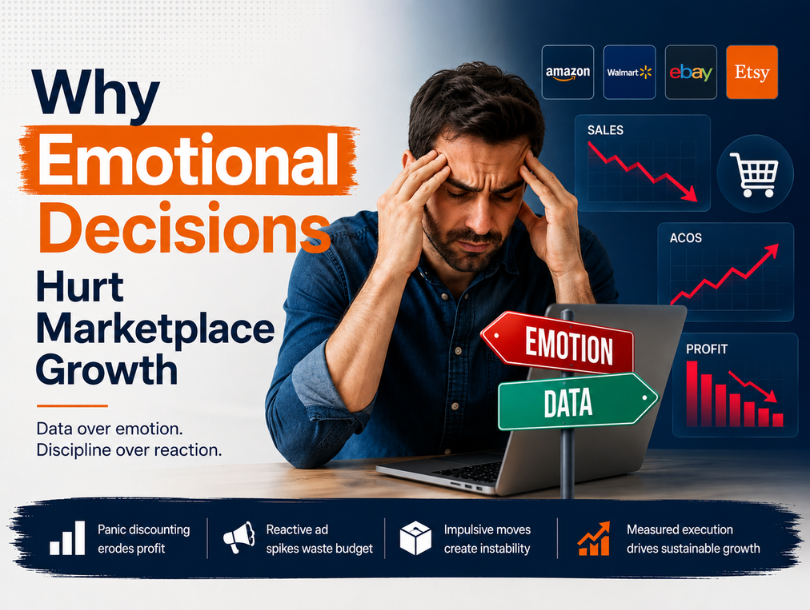
Selling on marketplaces like Amazon, Walmart, eBay, and Etsy can be highly rewarding, but it can also be emotionally demanding. Sales fluctuate, competitors change prices, advertising costs rise, and account issues appear without warning. In these moments, many sellers make quick decisions based on fear instead of facts.
A sudden sales drop often triggers panic discounting. Rising ACoS leads to rushed ad budget increases. A competitor’s aggressive pricing can cause unnecessary margin cuts. While these reactions may feel logical in the moment, they often create instability and reduce profitability.
Sustainable marketplace growth does not come from emotional reactions. It comes from disciplined, data-driven execution.
Common Emotional Decisions That Hurt Growth
1. Panic Discounting
When sales slow, many sellers immediately lower prices. This can temporarily increase conversion, but it often erodes profit and conditions customers to wait for discounts.
The hidden cost of panic discounting:
- Lower gross margins
- Reduced perceived value
- Price wars with competitors
- Difficulty returning to normal pricing
Successful sellers analyze conversion rates, Buy Box status, traffic trends, and competitor positioning before changing prices.
2. Sudden Advertising Spikes
A product loses rank, and the instinct is to double ad spend overnight. Without reviewing keyword performance and conversion data, this can quickly waste budget.
Better questions to ask:
- Which search terms are converting?
- Has click-through rate declined?
- Did product reviews change?
- Has the market become more competitive?
An increase in ad spend should be tied to measurable opportunities, not frustration.
3. Reactive Inventory Decisions
Fear of stockouts can lead to over-ordering. Fear of slow sales can cause under-ordering. Both mistakes impact growth.
Over-ordering risks:
- Cash flow strain
- Storage fees
- Excess inventory
Under-ordering risks:
- Stockouts
- Ranking loss
- Reduced customer trust
Inventory decisions should be based on sales velocity, lead times, and seasonality.
4. Constant Listing Changes
Some sellers rewrite titles, bullets, and images every few days after seeing small performance changes. Frequent updates make it difficult to identify what is actually working.
Marketplace optimization should be tested systematically, with enough time to collect meaningful data.
5. Copying Competitors Without Analysis
A competitor launches a promotion, changes pricing, or increases ads. Reacting without understanding their economics can lead to poor decisions.
Your business has unique margins, objectives, and customer behavior. Strategy should reflect your own numbers.
Why Emotional Decision-Making Happens
Marketplace selling is stressful because every metric feels urgent:
- Sales drop overnight
- CPCs rise unexpectedly
- Reviews fluctuate
- Inventory runs low
- Policy updates create uncertainty
These situations trigger emotional responses, especially when sellers are managing operations manually.
The most successful brands replace emotion with process.
The Cost of Reactive Management
Emotional decisions can create a cycle of instability:
- Sales decline
- Seller reacts impulsively
- Margins decrease
- Performance becomes inconsistent
- Stress increases
- More reactive decisions follow
Over time, this cycle weakens profitability, forecasting accuracy, and long-term growth.
What Data-Driven Sellers Do Differently
Top U.S. marketplace brands rely on structured decision-making.
They Review Key Metrics Regularly
- TACoS
- ACoS
- Conversion Rate
- Click-Through Rate
- Contribution Margin
- Inventory Turnover
- Return Rate
They Follow Testing Frameworks
Changes are documented, tested, and measured before broader implementation.
They Focus on Profitability
Revenue alone does not define success. Net profit and cash flow matter more.
They Stay Consistent
Measured execution produces more stable results than frequent tactical shifts.
Building Seller Discipline
Seller discipline is the ability to remain objective when performance changes.
Create Rules for Pricing
Define discount thresholds and profitability limits before launching promotions.
Set Advertising Benchmarks
Increase budgets only when conversion and margin targets are met.
Use Weekly Performance Reviews
Review data at scheduled intervals instead of reacting hourly.
Document Strategic Changes
Track what was changed, when, and why.
Focus on Long-Term Growth
Temporary fluctuations are normal. Decisions should support sustainable expansion.
Real Example: Emotion vs Strategy
A U.S. home goods seller sees a 20% drop in sales over three days.
Emotional Response
- Cuts prices by 15%
- Doubles ad budgets
- Orders less inventory
Strategic Response
- Reviews traffic and conversion
- Identifies a lost top keyword rank
- Updates bids on converting terms
- Preserves pricing and margins
The strategic response solves the underlying issue while protecting profitability.
Leadership Matters in Marketplace Growth
Marketplace performance reflects operational discipline. Brands that treat every short-term change as an emergency often struggle to scale.
Companies that rely on data, structured processes, and clear financial controls are more likely to build predictable growth across Amazon, Walmart, and other U.S. marketplaces.
How Other Marketplace Agency like Rey Ecom Ops Helps Sellers Make Smarter Decisions
Rey Ecom Ops helps U.S. sellers manage marketplace operations with a disciplined, data-first approach.
Our services include:
- Marketplace performance analysis
- Pricing and profitability reviews
- PPC optimization
- Inventory planning
- Listing conversion improvement
- Strategic growth reporting
We help brands eliminate reactive management and build stable, profitable growth.
Final Thoughts
Emotional decisions may feel like action, but they often create more problems than they solve. Panic discounting, sudden ad increases, and reactive choices lead to unstable performance and shrinking margins.
A strong ecommerce decision strategy is rooted in patience, data, and consistent execution.
If you want to scale your marketplace business in the U.S., discipline is one of your most valuable competitive advantages.