The Post-Launch Plateau Problem
The first 3–6 months of selling on a marketplace feel exciting. Sales increase. Ads convert. Reviews build. Momentum feels unstoppable.
Then something changes.
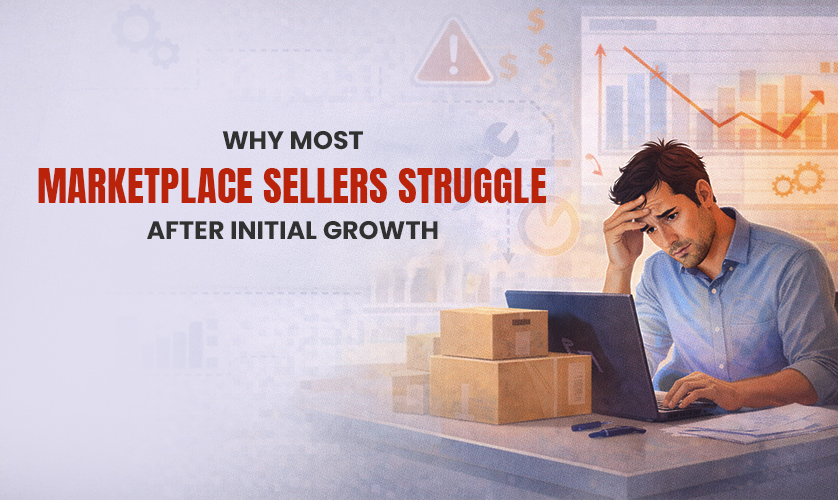
Sales flatten. Ad costs rise. Inventory planning becomes messy. What once felt like rapid progress turns into a frustrating plateau. Most sellers blame competition — but that’s rarely the real reason.
The real issue is system fatigue.
Early Growth Is Momentum-Driven
In the beginning, growth comes from:
Fresh listing boosts
New product visibility
Early ad learning cycles
Low competition on specific keywords
Founder-driven focus and energy
This phase rewards speed and experimentation. But momentum is temporary. Platforms stop “testing” your product. Algorithms stabilize. Advertising becomes more expensive.
Without structure, performance naturally levels off.
The Real Reason: Lack of Process
After initial success, most sellers don’t upgrade their operations. They keep using launch-level strategies for scale-level goals.
This creates three core seller growth problems:
1. No Structured Optimisation
Listings are rarely updated after launch.
Keywords aren’t refined.
Conversion data isn’t analyzed monthly.
Optimisation becomes reactive instead of systematic.
2. Campaign Fatigue
Ads that once performed well slowly decline.
ACOS increases.
Budget allocation becomes emotional instead of data-driven.
Without structured campaign refinement, performance decays quietly.
3. Operational Discipline Breaks
Inventory forecasting becomes inconsistent.
Profit tracking is irregular.
Returns and feedback aren’t analyzed deeply.
Scaling without operational systems creates internal friction.
Sustainable Scaling Requires Process, Not Momentum
Momentum starts growth.
Process sustains it.
True marketplace scaling requires:
Monthly listing optimisation cycles
Weekly ad performance audits
Clear profit dashboards
Inventory forecasting discipline
Conversion rate tracking
Structured A/B testing
Growth is no longer about pushing harder.
It’s about refining smarter.
The Shift From Seller to Operator
Sellers plateau when they remain product-focused only.
They scale when they become system-focused.
A real ecommerce growth strategy is built on:
Process documentation
Data review cadence
Performance benchmarks
Scalable SOPs
Continuous optimisation loops
Without systems, growth slows.
With systems, growth compounds.
Final Thought
The plateau is not failure.
It’s a signal.
It signals that your business has outgrown momentum and now requires structure.
Most sellers stall because they keep chasing growth.
The ones who scale build systems.
Sustainable marketplace growth isn’t about working more.
It’s about operating better.