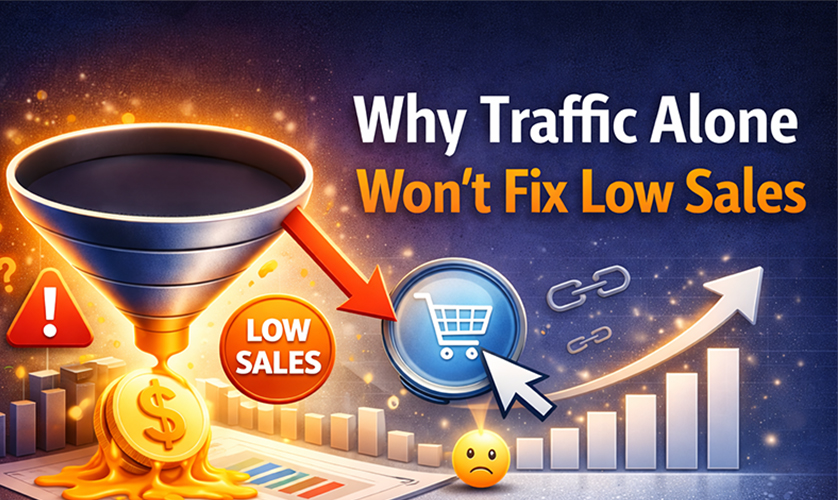
At its core, the problem lies in the gap between visibility and persuasion.
Getting traffic means people are seeing your product.
Conversion means they are choosing it.
Many brands focus heavily on driving clicks but ignore what happens after the click. This creates a dangerous imbalance where:
- High traffic + low conversion = wasted ad spend
- Low conversion rate = weak listing performance
- Poor performance = declining organic rankings
In short, traffic amplifies your current reality—good or bad.
Why More Traffic Can Hurt Your Business
Scaling traffic without fixing conversion is like pouring water into a leaking bucket.
Here’s what typically happens:
1. Ad Spend Burns Faster
If your listing doesn’t convince buyers, every additional click becomes a cost without a return.
2. Algorithm Signals Drop
Marketplaces like Amazon reward listings that convert. Low conversion rates signal poor relevance, pushing your product down in rankings.
3. Customer Trust Breaks
Traffic brings attention, but your listing must build trust. Weak visuals, unclear messaging, or poor reviews push customers away instantly.
What Actually Drives Conversions
Before scaling traffic, your focus should be on conversion clarity—ensuring your listing answers every buyer question instantly.
1. Visual First Impression
Your images should not just look good—they should sell:
- Clear product benefits
- Lifestyle usage
- Before/after impact
- Trust signals
2. Value Communication
Customers don’t buy products—they buy outcomes.
Your listing must clearly answer:
👉 Why should I buy this?
👉 What problem does it solve?
👉 Why is it better than others?
3. Social Proof & Trust
Reviews, ratings, and credibility elements directly influence buying decisions. Even strong traffic won’t convert without trust.
4. Listing Structure Optimization
A high-converting listing is structured, not random:
- Strong title with keywords + clarity
- Benefit-driven bullet points
- Persuasive description or A+ content
This is where marketplace optimization becomes critical.
The Right Growth Approach
Instead of chasing traffic first, smart brands follow this sequence:
Step 1: Fix Conversion
- Optimize listing content
- Improve visuals
- Strengthen value proposition
Step 2: Validate Performance
- Monitor conversion rate (CVR)
- Test changes
- Identify what works
Step 3: Scale Traffic
Once your listing converts efficiently, traffic becomes profitable—not risky.
The Real Strategy: Conversion Before Scale
A strong ecommerce conversion strategy focuses on building a foundation first. Traffic should act as a multiplier, not a gamble.
Because in reality:
More traffic doesn’t create sales.
Better conversion does.
Final Thought
If your sales are low, don’t ask, “How do I get more traffic?”
Ask, “Why aren’t my current visitors buying?”
Fix that—and traffic will finally work for you, not against you.