Modern ecommerce growth is no longer driven by isolated tactics. Brands that scale successfully across Amazon, Walmart, eBay, Wayfair, and other marketplaces rely on a connected ecosystem where advertising, listing optimization, inventory management, analytics, and compliance work together. A strong marketplace growth strategy is not about chasing temporary spikes in sales — it is about building a repeatable and scalable operational framework.
Today’s high-performing brands understand that sustainable growth depends on structure, data, and long-term execution. Businesses that invest in a complete ecommerce growth system gain stronger visibility, better conversion rates, improved profitability, and greater marketplace stability.
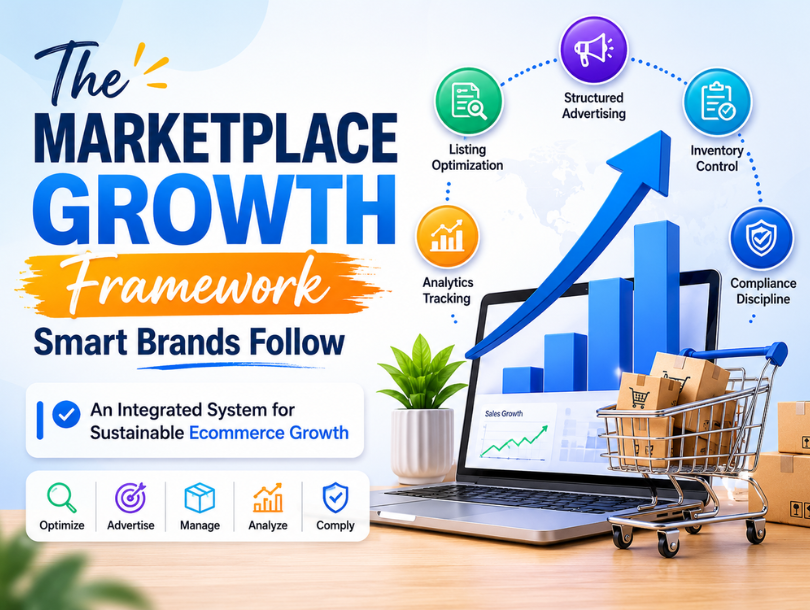
Why Smart Brands Use an Integrated Marketplace Growth Framework
Many sellers fail because they treat marketplaces like disconnected channels. They optimize listings one month, increase ad spend the next month, and react to inventory problems only after sales begin dropping.
Successful brands follow a unified marketplace management strategy where every growth component supports the others.
An integrated scaling model helps brands:
- Improve organic ranking
- Increase advertising efficiency
- Maintain healthy inventory flow
- Prevent account disruptions
- Track profitability accurately
- Build long-term marketplace authority
Instead of relying on guesswork, brands create systems that continuously improve performance across every operational layer.
The Core Components of a Marketplace Growth Framework
1. Listing Optimization as the Foundation
Product listings are the first conversion layer of any marketplace business. Without optimized listings, advertising spend becomes inefficient because traffic does not convert properly.
Strong listing optimization includes:
- SEO-focused product titles
- Keyword-rich bullet points
- Conversion-driven descriptions
- High-quality product images
- A+ content or enhanced brand content
- Backend keyword optimization
Top-performing brands regularly update listings based on customer behavior, search trends, and conversion analytics.
A listing should not simply describe a product. It should answer customer intent, reduce hesitation, and improve buying confidence.
Advertising That Supports Long-Term Scaling
Paid advertising should function as a strategic growth accelerator rather than a short-term sales boost.
Smart brands build advertising systems using:
- Sponsored Products campaigns
- Sponsored Brands campaigns
- Retargeting strategies
- Search term isolation
- Profitability-based bid optimization
- Seasonal scaling plans
A structured advertising model helps businesses maintain lower ACoS while increasing visibility across competitive categories.
Instead of increasing ad spend blindly, successful sellers analyze:
- Click-through rates
- Conversion rates
- Search term profitability
- Organic ranking improvements
- TACoS trends
Advertising becomes far more effective when paired with optimized listings and accurate inventory forecasting.
Inventory Control Drives Marketplace Stability
Inventory problems damage growth faster than most sellers realize.
Out-of-stock products reduce keyword ranking, interrupt advertising performance, and hurt customer trust. Overstocking creates unnecessary storage costs and cash flow pressure.
A scalable ecommerce growth system includes:
- Demand forecasting
- Reorder planning
- Inventory aging analysis
- Seasonal stock preparation
- FBA replenishment management
- Multi-channel inventory synchronization
Smart brands understand that inventory is directly connected to profitability and visibility.
Marketplace algorithms reward consistent availability and operational reliability.
Analytics Tracking Creates Smarter Decisions
Brands that scale effectively rely heavily on analytics rather than assumptions.
Marketplace data reveals:
- Which products deserve scaling
- Which keywords generate profit
- Which campaigns waste budget
- Which customer behaviors affect conversions
- Which inventory trends create risk
Key performance indicators often include:
- Conversion rate
- ACoS
- TACoS
- Organic ranking
- Customer acquisition cost
- Return rates
- Buy Box percentage
- Inventory turnover
An advanced marketplace management strategy uses analytics to guide every operational decision.
Without structured reporting systems, brands struggle to identify what is actually driving growth.
Compliance Discipline Protects Long-Term Growth
Many growing brands underestimate marketplace compliance until they face account warnings, suppressed listings, or suspensions.
Marketplace platforms continuously update policies regarding:
- Product authenticity
- Review policies
- Image requirements
- Intellectual property
- Category restrictions
- Safety certifications
- Advertising standards
Smart brands build compliance into their operational framework from the beginning.
Compliance discipline includes:
- Monitoring account health metrics
- Maintaining valid invoices and documentation
- Reviewing policy updates regularly
- Preventing restricted keyword usage
- Managing customer service standards
- Protecting brand registry assets
A single compliance issue can interrupt years of growth momentum.
Why Isolated Tactics Fail Over Time
Many sellers focus only on one area:
- Running ads without improving listings
- Increasing inventory without demand forecasting
- Scaling products without analytics tracking
- Expanding marketplaces without operational systems
These disconnected approaches create instability.
Real marketplace scaling happens when every operational layer works together inside one ecosystem.
Integrated systems outperform fragmented tactics because they improve:
- Efficiency
- Visibility
- Profitability
- Customer experience
- Operational consistency
This is why leading ecommerce brands invest in structured frameworks instead of temporary growth hacks.
Building a Sustainable Ecommerce Growth System
Brands looking to scale successfully should focus on creating repeatable systems instead of chasing short-term trends.
A strong framework usually includes:
- Marketplace SEO optimization
- Structured PPC management
- Inventory forecasting systems
- Performance analytics dashboards
- Compliance monitoring workflows
- Conversion optimization strategies
- Multi-marketplace operational alignment
The goal is to create sustainable momentum where every improvement strengthens the overall business ecosystem.
The Future of Marketplace Scaling
Marketplace competition continues to increase every year. Brands that rely only on manual processes or temporary tactics will struggle to maintain profitability.
The future belongs to businesses that:
- Use data-driven decision-making
- Maintain operational discipline
- Build scalable advertising systems
- Prioritize customer experience
- Invest in marketplace infrastructure
An integrated marketplace management strategy creates resilience, profitability, and long-term scalability in highly competitive ecommerce environments.
Conclusion
Sustainable ecommerce success does not come from isolated tactics. Smart brands follow a connected marketplace growth framework where listing optimization, advertising, inventory management, analytics, and compliance operate together.
This integrated approach creates stronger rankings, improved profitability, better operational control, and long-term marketplace stability.
Businesses that invest in a structured ecommerce growth system position themselves for scalable and sustainable marketplace expansion in an increasingly competitive digital commerce landscape.