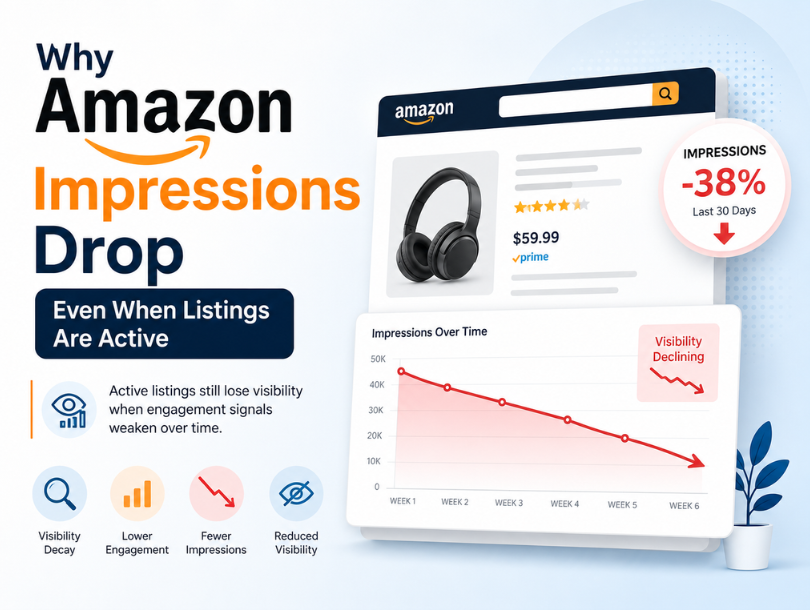
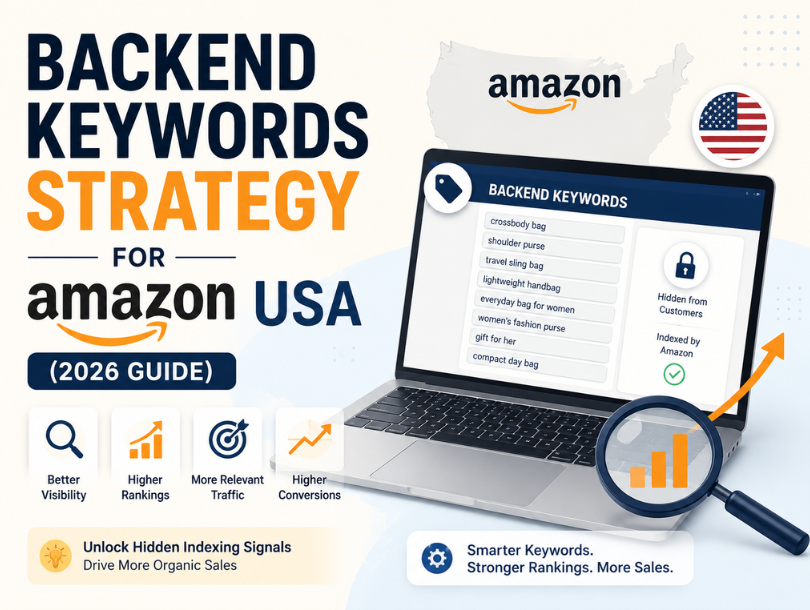
Amazon sellers in the USA are entering a more competitive marketplace in 2026, where visibility depends on much more than product titles and front-end optimization. While many brands continue stuffing titles with repetitive phrases, experienced sellers are now focusing on hidden indexing signals that influence how Amazon understands and ranks products internally.
Backend keywords have become one of the most overlooked growth opportunities for sellers trying to increase discoverability without damaging listing readability. A well-structured backend keyword strategy helps Amazon connect products with relevant customer searches while maintaining a clean, conversion-focused product page.
If your product is not appearing for valuable search terms despite having optimized titles and bullet points, the problem may be hidden behind the listing itself.
What Are Amazon Backend Keywords?
Amazon backend keywords are hidden search terms added inside Seller Central that customers cannot see directly on the product listing. These keywords help Amazon understand additional product relevance and indexing opportunities.
Backend keywords allow sellers to target:
- Alternate spellings
- Long-tail search terms
- Synonyms
- Regional terminology
- Misspellings
- Hidden buying intent phrases
Unlike product titles, backend search terms do not affect listing appearance. However, they heavily influence search discoverability when used strategically.
In 2026, Amazon’s algorithm evaluates backend keyword quality more intelligently than before. Keyword stuffing no longer improves rankings. Instead, Amazon prioritizes contextual relevance, indexing diversity, and shopper intent alignment.
Why Backend Keywords Matter More in 2026
Most sellers still over-optimize visible content while ignoring backend indexing opportunities. This creates missed ranking potential across thousands of search variations.
Amazon’s search system now uses behavioral relevance signals combined with semantic keyword understanding. That means backend fields help strengthen product-category relationships even when exact-match keywords are not placed in titles.
A strong backend keyword strategy can help:
- Improve organic indexing
- Expand keyword reach
- Increase product discoverability
- Support PPC relevance
- Reduce dependency on aggressive title optimization
- Improve long-tail keyword visibility
For USA marketplace sellers competing in saturated categories, backend optimization is no longer optional.
Hidden Indexing Signals Amazon Uses
Amazon’s search algorithm now evaluates hidden indexing signals beyond visible listing content. These include:
1. Search Term Relevance
Amazon checks whether backend keywords genuinely relate to product intent. Random high-volume keywords reduce listing relevance instead of helping it.
2. Conversion Alignment
If backend keywords attract irrelevant clicks that do not convert, Amazon may lower search visibility over time.
3. Semantic Keyword Relationships
Amazon understands related terminology better than before. For example:
- “Crossbody purse”
- “Shoulder handbag”
- “Travel sling bag”
These terms may support indexing together when contextually connected.
4. Keyword Diversity
Repeated keywords across titles, bullets, and backend fields waste indexing space. Amazon prefers broader keyword coverage.
5. Marketplace Localization
USA shoppers use different terminology than international audiences. Backend keywords should reflect American search behavior and buyer language patterns.
Common Backend Keyword Mistakes Sellers Make
Many sellers unknowingly damage their indexing potential through poor backend practices.
Repeating Front-End Keywords
Repeating title keywords inside backend fields wastes character space and limits indexing opportunities.
Using Irrelevant Traffic Keywords
High-volume keywords unrelated to the product may increase impressions temporarily but hurt conversion signals later.
Ignoring Long-Tail Buyer Intent
Specific buying searches often convert better than broad keywords. Backend fields should include realistic purchase-intent phrases.
Adding Competitor Brand Names
Using competitor trademarks violates Amazon policies and can trigger listing suppression risks.
Overstuffing Search Terms
Amazon now filters unnecessary repetition and low-quality keyword stuffing more aggressively.
How to Build an Effective Amazon Backend Keyword Strategy
Focus on Search Intent
Think like the customer. What phrases would shoppers type when searching for your product naturally?
Instead of:
- “bag women purse fashion”
Use:
- “lightweight travel crossbody bag”
- “everyday shoulder purse for women”
Intent-focused keywords improve indexing quality.
Use Keyword Variations
Include:
- Singular and plural variations
- Synonyms
- Regional phrases
- Common misspellings
- Material-related searches
- Functional use cases
This expands keyword reach naturally.
Prioritize Long-Tail Opportunities
Long-tail keywords usually have:
- Lower competition
- Better conversion rates
- Stronger buyer intent
Examples:
- “waterproof hiking backpack for travel”
- “gold hoop earrings for sensitive ears”
These searches often convert better than generic broad keywords.
Remove Duplicate Words
Amazon does not require repeated keyword entries. Every backend character should introduce new indexing value.
Analyze Search Term Reports
Use PPC search term reports to identify:
- High-converting keywords
- Hidden customer phrases
- Long-tail opportunities
- Emerging search trends
These reports often reveal backend keyword opportunities competitors miss.
Backend Keywords vs Front-End Keywords
Both play important roles, but they serve different purposes.
| Front-End Keywords | Backend Keywords |
|---|---|
| Visible to shoppers | Hidden from shoppers |
| Affect CTR and readability | Focus on indexing expansion |
| Limited by customer experience | Flexible for broader targeting |
| Used for primary ranking | Used for hidden discoverability |
Strong Amazon SEO combines both strategically.
USA Marketplace Trends Influencing Backend Strategy
Amazon USA search behavior is changing rapidly in 2026.
Key trends include:
- Voice-search style queries
- Conversational long-tail searches
- Mobile-first keyword patterns
- Seasonal intent phrases
- AI-generated recommendation matching
Shoppers now search more naturally than before. Backend keyword strategies should reflect this evolution.
For example:
Instead of:
- “wireless earbuds”
Customers may search:
- “best wireless earbuds for gym workouts”
Longer intent-driven queries create stronger indexing opportunities.
Why Marketplace Account Management Matters
Backend keyword optimization requires continuous monitoring, testing, and indexing analysis. Many brands fail because they treat Amazon SEO as a one-time setup process.
Professional marketplace account management helps sellers:
- Identify hidden keyword gaps
- Monitor indexing performance
- Optimize search relevance
- Align PPC and SEO strategy
- Improve organic ranking stability
- Reduce wasted keyword targeting
Successful sellers continuously adapt backend keyword strategies based on real search behavior and conversion data.
Final Thoughts
Amazon backend keywords are no longer just hidden metadata fields. In 2026, they act as strategic indexing signals that influence product discoverability, keyword reach, and ranking stability across the USA marketplace.
Most sellers still focus heavily on visible content optimization while ignoring backend opportunities that could dramatically improve search visibility.
The brands winning on Amazon today are not simply stuffing more keywords into titles. They are building smarter indexing ecosystems using relevant backend search terms, long-tail intent phrases, semantic keyword relationships, and ongoing marketplace optimization strategies.
If your listings are active but visibility remains inconsistent, your backend keyword structure may be the missing piece.