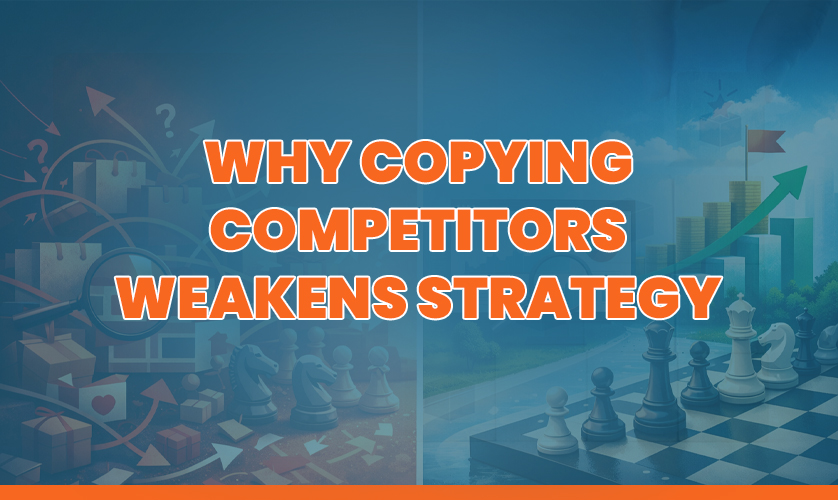
In today’s fast-moving e-commerce landscape, it’s tempting to look at competitors and replicate what seems to be working for them. From pricing and product listings to ad strategies and creatives many brands fall into the trap of blind benchmarking. But what looks like a shortcut to success often becomes the biggest reason for stagnation.
The Illusion of “What Works”
Just because a competitor is ranking well or scaling ads doesn’t mean their strategy is universally effective. Their success is backed by unique variables brand authority, historical data, conversion rates, supplier margins, and customer loyalty. When you copy their approach without access to these internal metrics, you’re only replicating the surface, not the system.
Different Costs, Different Decisions
Every business operates under a different cost structure. One brand may afford aggressive discounting due to high margins, while another relies on lean pricing for survival. Copying pricing strategies without understanding backend costs can quickly erode profitability and create unsustainable growth patterns.
Data Drives Strategy, Not Assumptions
Competitors make decisions based on their own performance data—click-through rates, conversion behavior, repeat purchases, and customer feedback loops. Blindly following their moves means ignoring your own data, which is far more valuable. Your strategy should evolve from what your audience responds to, not what others appear to be doing.
The Risk of Losing Market Position
When multiple brands start copying each other, differentiation disappears. Instead of building a unique marketplace positioning, you become just another option in a crowded space. Strong brands don’t follow they define their category through clear identity, value proposition, and customer experience.
Build Strategy from Within
A winning competitive strategy in ecommerce is not about imitation, it’s about interpretation. Study competitors to understand market trends, gaps, and opportunities, but filter those insights through your own business model. Focus on your strengths, optimize based on your data, and build a strategy that reflects your brand’s unique position.
Conclusion
Blind benchmarking may feel safe, but it limits growth and weakens long-term strategy. The brands that scale consistently are the ones that trust their own data, refine their internal systems, and create strategies that competitors eventually try to copy not the other way around.