Growth feels exciting—more orders, more traffic, more revenue. But here’s the truth most businesses discover too late: scaling without systems doesn’t create success… it creates chaos.
Operational maturity is what separates brands that grow sustainably from those that burn out under their own success. If your backend isn’t built to handle growth, every new order multiplies inefficiencies instead of profits.
Why Growth Without Systems Fails
Many e-commerce businesses focus heavily on sales and marketing, but ignore the infrastructure behind it. The result?
- Delayed order processing
- Inventory mismatches
- Poor customer experience
- Inconsistent team performance
Growth amplifies everything—including your weaknesses. Without a strong ecommerce systems strategy, even a successful campaign can lead to operational breakdowns.
The Hidden Cost of Inefficiencies
When systems are missing, your team relies on manual work, assumptions, and scattered processes. This leads to:
1. Time Drain
Teams spend hours fixing avoidable mistakes instead of focusing on growth.
2. Revenue Leakage
Missed orders, stockouts, and incorrect listings directly impact your bottom line.
3. Team Dependency
Operations depend on individuals instead of structured processes—making scaling risky.
4. Poor Decision Making
Without proper reporting, decisions are based on guesswork rather than data.
What Operational Maturity Really Means
Operational maturity is not just about “being organized.” It’s about building systems that allow your business to scale without breaking.
A mature operation includes:
SOPs (Standard Operating Procedures)
Clear, repeatable processes for every task—from product listing to order fulfillment.
Reporting Systems
Real-time dashboards tracking sales, ad performance, inventory, and customer behavior.
Forecasting Models
Data-driven planning for inventory, demand, and cash flow.
Automation & Integration
Tools that reduce manual work and connect your entire ecosystem—marketplaces, ads, inventory, and logistics.
Building a Strong Ecommerce Systems Strategy
If you want sustainable growth, your systems need to evolve alongside your revenue.
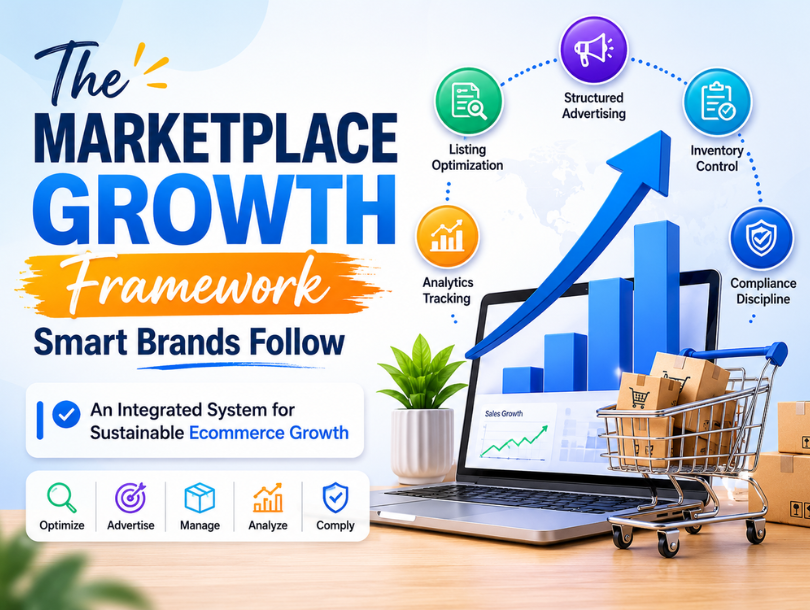
1. Document Everything
Start by creating SOPs for core operations—listing, ads, inventory, and customer support.
2. Centralize Your Data
Use dashboards to track KPIs across platforms like Amazon, Walmart, and Shopify.
3. Automate Repetitive Tasks
From inventory syncing to order processing, automation reduces human error and saves time.
4. Implement Forecasting
Predict demand based on historical data to avoid stockouts or overstocking.
5. Standardize Marketplace Management
A structured approach to marketplace management ensures consistency across platforms and improves scalability.
Systems That Support Scaling (Not Just Survival)
The goal isn’t just to “manage” growth—it’s to handle it effortlessly.
When your systems are strong:
- Orders flow smoothly without bottlenecks
- Inventory stays aligned with demand
- Teams work faster with fewer errors
- Decisions are backed by real data
This is where operational maturity transforms chaos into control.
Final Thought
Scaling a business is not just about increasing revenue—it’s about strengthening the foundation that supports it.
Without systems, growth creates pressure.
With systems, growth creates opportunity.
If you’re serious about long-term success, start focusing on your ecommerce systems strategy today—because the brands that win aren’t just the ones that grow fast, but the ones that grow smart.